Ford RS200 Front Chassis Section Paint Repair
This was a classic example of what happens when old rubber brake hoses, in this case those linking master cylinder to fluid reservoir, are left on a car way beyond end of life. They start to ‘sweat’ brake fluid, which over time drips onto painted components, exacerbated in this case by the fluid being pulled under some fibreglass mouldings by capillary action. The initial inspection suggested a small area of softened and peeling paint, revealing the bare metal underneath, which quickly turned into a large area of softened paint once the true extent of the damage was exposed.


This issue had been somewhat masked because the rubber cap seals on both brake fluid reservoirs and the clutch fluid reservoir were also softened/damaged, allowing fluid to leak out when the car was driven hard.
Repairing this properly required the removal of pretty much all of the front of the car, including the transmission, steering rack, driveshafts, the suspension on both sides, all of the structural bracing, the main aluminium water pipes, brake pipes, windscreen scuttle, wiper assembly, wring harness, etc, etc.
All in all quite a big job, and something which could have been avoided if caught early.
First job was to remove all the effected paint, which extended way further than was obvious.
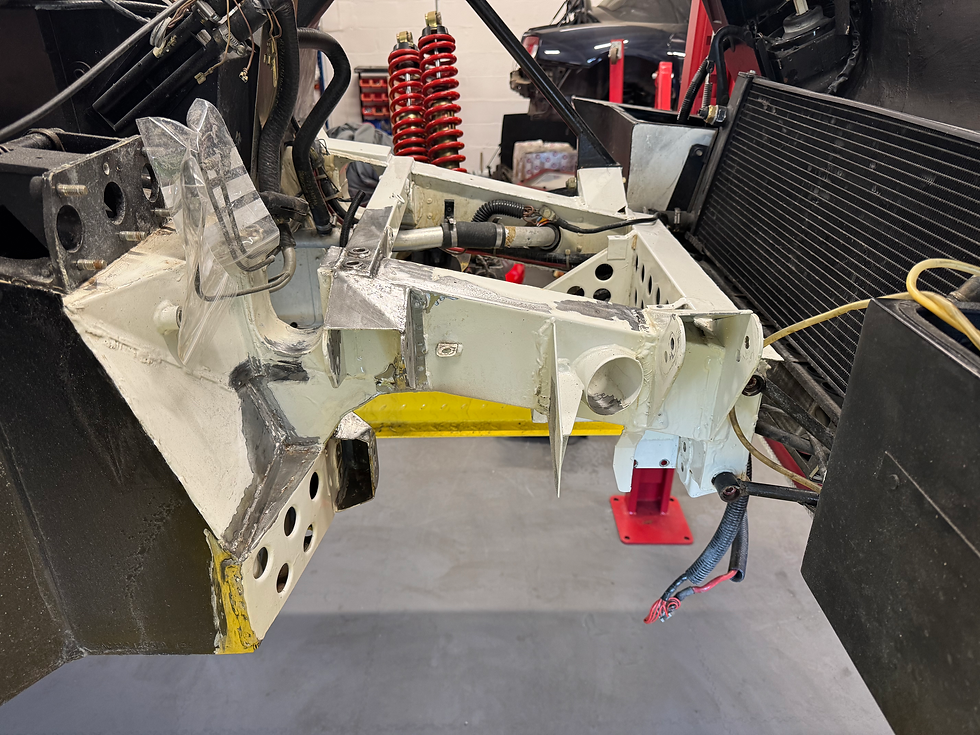

Next was a good clean up of the bare metal followed by neutralising any hidden rust and phosphate coating the chassis using phosphoric acid


Then masking and priming:
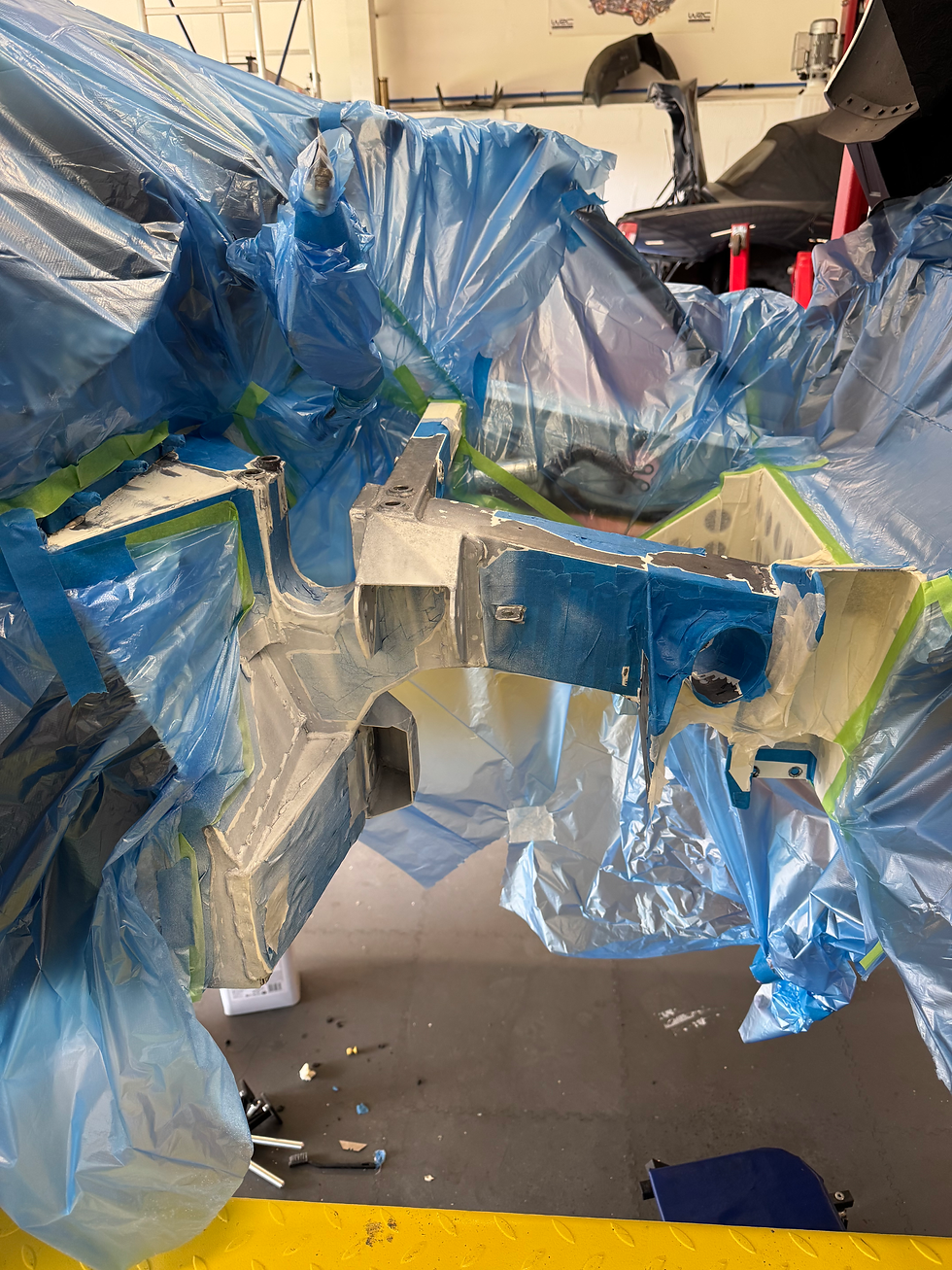


Followed by topcoat:


Then rebuilding:

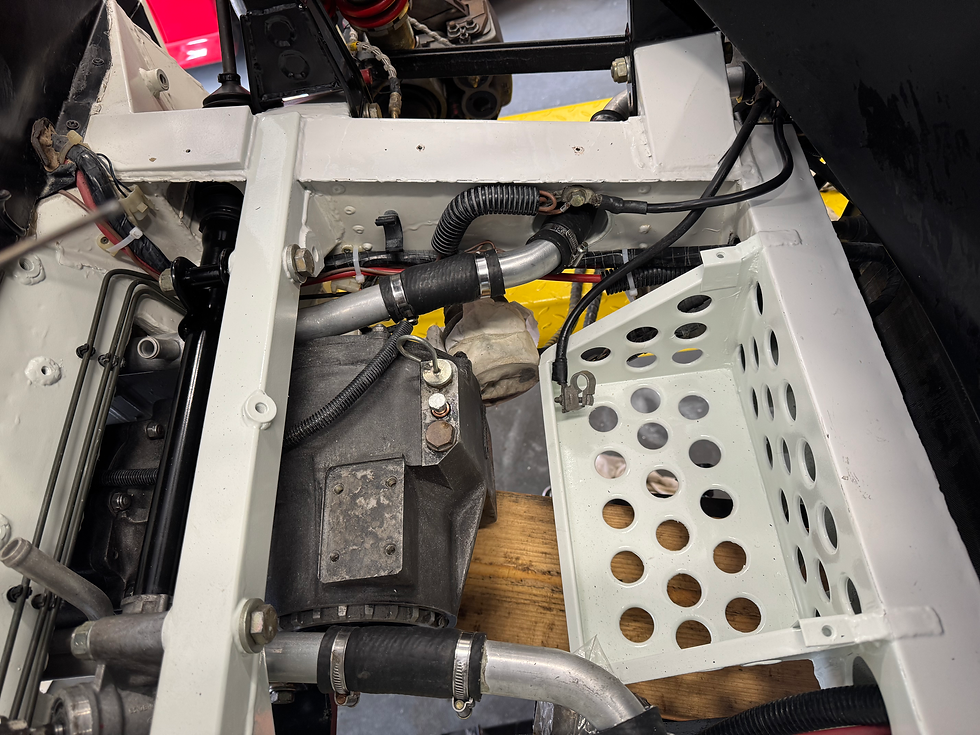
The end result was well worth it though, and fortunately the paint damage was relatively localised and hadn’t allowed any corrosion to set in, which is a credit to how the car had been stored. It looks as good as new now, even if 95% of all the hard work was completely hidden once the car was back together!
Ford RS200 Seats
If you have ever sat in an RS200 you will know that it’s quite a cramped and slightly claustrophobic environment, with almost zero visibility from the B pillars back.
A large part of this is down to the seating position. When Ford built these cars, they were initially planned to be sold as ‘ready to go’ clubman competition cars, hence the relatively poor fit and finish and the competition clutch. The seats they chose were a Sparco completion seat, which is very snug and shaped to give that typical close to the steering wheel, upright driving position that rally drivers prefer.
A great deal of the development work on these cars was done by Malcolm Wilson, who, if you have ever had the pleasure of meeting him, is quite a compact human being, and it’s fair to say the standard seat set-up is very much geared towards somebody of similar size. The seat runners position the Sparco seat about 40mm from the floor.
If you are tall, then getting into a stock RS200 is not fun, and the resultant driving position is tolerable for about 10 minutes.
Removing the stock seat assembly reveals a surprisingly generous amount of space. I’m 6’5”, and sat on the floor I was actually too far back and needed to come forwards to be comfortable.
After much searching, we found a seat shape which perfectly matched the rear bulkhead angle and had a flat bottom, and dropping this in the car gave the perfect driving position for a taller driver.

Next job was to make up a low profile seat frame that picked up the existing seat frame bolt holes in the floor (bear in mind the floor on an RS200 is an aluminium honeycomb composite, so just drilling holes in it is not an option) and allow the new seat to be bolted to the new seat frame.


The seats were trimmed in red alcontara to match the pattern on the original seats and the seat frames were powder coated to match the carpet.


The end result looks amazing and you would never know it wasn’t stock unless you had both old and new seats in the same car to compare them side by side. The only downside is that the seat is no longer adjustable, but how often do you adjust the seat once you find your perfect driving position?